Paseo Baptist Church
 Plan a Visit
 Get Involved
 Give
GiveHistory
The Journey
Part I
Shiloh Baptist Mission
The Paseo Baptist Church was organized in 1884 as the Shiloh Baptist Mission. The organizers and original members held their meetings at 20th Street and Baltimore Avenue. There were fourteen charter members with two deacons, Eli Harris and Lewis Harris. The first Pastor and organizer of Shiloh Baptist Mission was Reverend G.A. Turner. The Mission later moved to Harrison Street between 18th and 19th Streets.
Mount Carmel Baptist Church
The next move was to 1322 East 18th Street. At this location, the Church was organized as the Mount Carmel Baptist Church. Four deacons were appointed, namely George Shannon, Henry Johnson, Major Hyde and Mose Owens, who were not ordained.
In 1888, the Reverend C. Shackleford was called as the second Pastor. At this time the Deacon Board added the following members: Henry Bartley, James Long, James Anderson, R.W, Alexander, G.W Finney, and H.J. Spigner. Deacon Spigner held the office of Church Secretary until Reverend D.A. Holmes was called. Reverend J.A.D. Jenkins was called as the third Pastor. The fourth Pastor, Reverend Dan Jones, served the Church from 1895-1896.
Vine Street Baptist Church
During Reverend Dan Jones' pastorate, the Church moved to its new location at 1825 Vine Street on July 20, 1896. The fifth Pastor, Reverend Thomas H. Ewing, was called in February 1897. Under Reverend Ewing’s pastorate, the following deacons were appointed: R.W Alexander, G.W Finney, Henry Bartley, Thomas Pollard, Thomas Glenn, DA Sizemore, G.J. Haynes and Dr. M.H. Lambright. D.L Lambright was never ordained as a deacon because he moved away from the city. Members of the Trustee Board at that time were: John Reed, William Hill, C.H. Harris, S.T Allen, D.W Rose, and E.A. Boaz, Chairman.
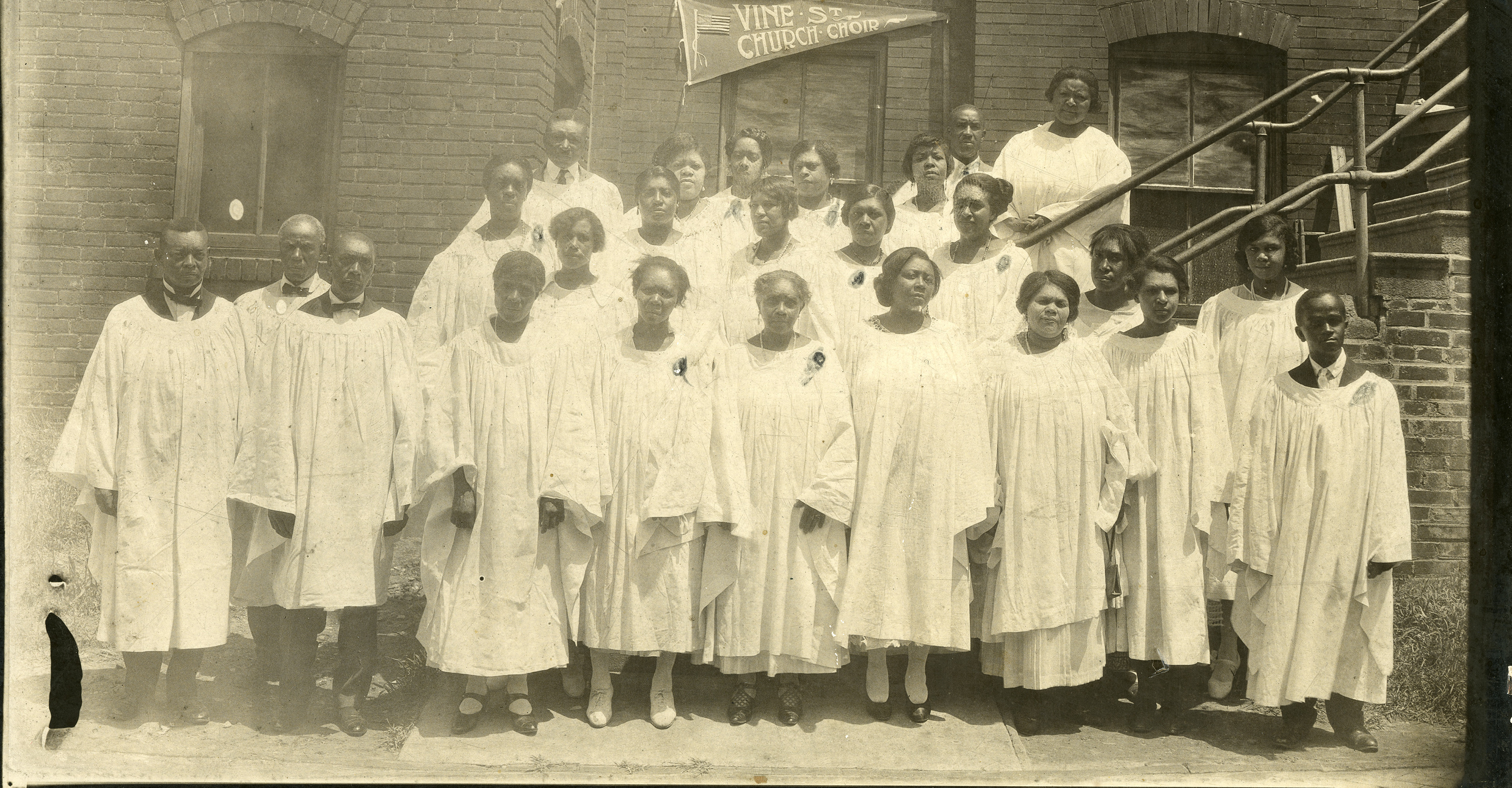
Owned and contributed by Taylor Fields
Reverend Thomas H. Ewing left his home town of Paducah, KY, walking to Kansas City, MO. Later he moved to Nebraska, where he earned his medical degree, graduating with honors. Ewing founded a private medical practice and later returned to Kansas City in 1887 and later became become pastor of the Vine Street Baptist Church.
The church had a small, poor, divided congregation, and the church property was indebted. Ewing helped get the church back in good standing and built a larger church building.
Notable Kentucky African Americans
He helped his congregation improve their personal finances by directing them to participating in savings plans and organizing various financial clubs in order to increase their assets by purchasing their homes and investing in real estate.
Vine Street Baptist Church became one of the largest African American Baptist churches in Kansas City, with more than 100 members owning their own homes. Ewing also followed his own advice: he owned farms and other properties in Oklahoma, Kansas, and Missouri.
Notable Kentucky African Americans
In addition to a keen mind Reverend Thomas H. Ewing was financially savvy making intelligent financial decisions as such he earned the title of "wealthiest Colored Baptist minister in the entire West".
Paseo Baptist Church

Reverend Daniel Arthur Holmes
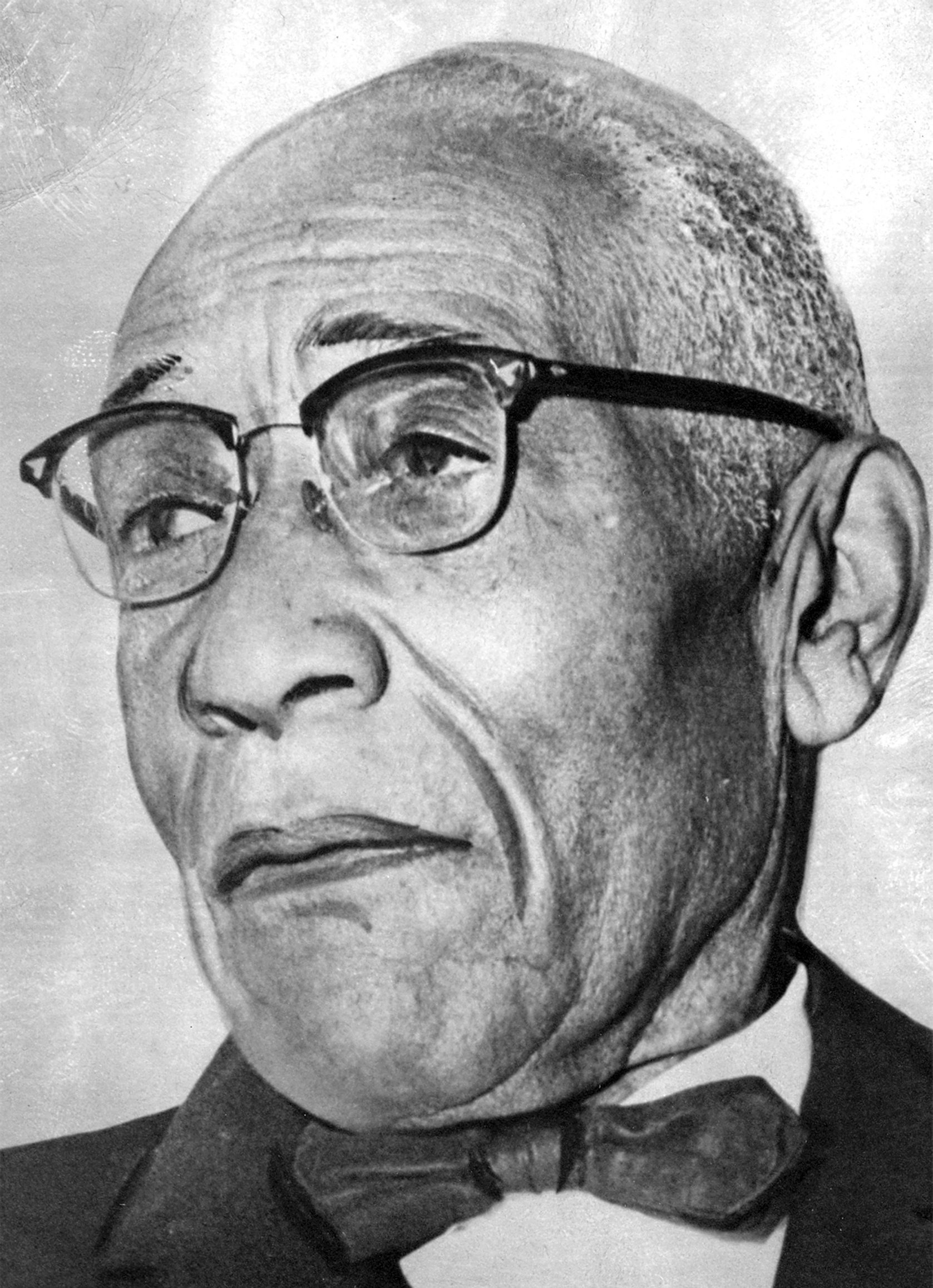
“My reaction to this is the passage by our Lord Jesus to His Disciples. He that would be great among you, let him be your servant. Service and humility, these two put together, is the answer to all the honors that have come to me through my life as a minister and public servant.” -- Dr. Holmes, 1948
In 1921, Reverend Daniel Arthur Holmes was called as Pastor. Under the guidance and leadership of Dr. Holmes, God's plan for Paseo became more manifest. It was under the leadership of Dr. Holmes that far reaching changes played a vital part in the Church's growth. Paseo Baptist Church ministries and outreach programs grew significantly. The Church assumed a vibrant and vital role in the religious and civic life of Kansas City. Rev. D. A. Holmes became a dominant figure in the ecclesiastical and civic community. Indeed, Paseo Baptist Church became the epicenter of resistance to political corruption and racial injustice. No stranger to confrontation, Dr. Holmes waged a long and bitter battle against the Kansas City Board of Education, which resulted in a new Lincoln High School at 2111 Woodland. At the same time, he challenged the political powers and business community in Kansas City for more jobs and better homes for African-Americans.
In 1927, on the eve of the Great Depression, "angels of vision" of Paseo Baptist Church led by Rev. Holmes, took an enormous step of faith and constructed its present edifice "from the ground up" at a cost of $250,000. Not only did God bless this act of faith, but the Church prospered and expanded its effort to make real the gospel to Kansas City's African-American community. Inspired by Rev. Holmes' messages of dignity and hope, the saints of Paseo made a significant impact in the business, education, medical and legal communities of Kansas City. In 1939, Dr. Holmes spearheaded an effort to integrate the University of Missouri-Columbia.
In 1972, Rev. Holmes passed away in Lincoln, Nebraska. He left a legacy of strength and courage. His life was a personification of the scripture: "God hath not given us the spirit of fear; but of power, and of love, and of a sound mind." 2 Tim 1:7
 View Timeline